Fabrication Depots
Fabrication depots are Selenite Corp's nanotech hubs scattered across the flooded surface — islands of corporate infrastructure where Moonstalkers spawn, vehicles are fabricated, and cargo missions begin. They're the gateway between your vessel and the dangerous work below.
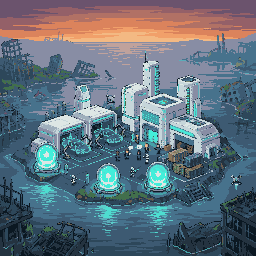
What Depots Are
Corporate Infrastructure Hubs
Fabrication depots serve multiple interconnected functions:
- Teleportation arrays — Where Moonstalkers materialize when spawning to the surface and extract back to their vessels
- Nanotech fabrication bays — Molecular manufacturing systems that build cargo vehicles on-demand
- Cargo processing centers — Staging areas for materials being transported across the surface
- Contract terminals — Where available missions are posted and accepted
- Vehicle return stations — Where Corp-owned transports are returned and disassembled for recycling
Depots are clean corporate islands in a flooded ruin. They're sterile, efficient, monitored — and you're dependent on them for access to work and extraction.
Depot Facilities
Teleportation Arrays
The heart of every depot is its teleportation infrastructure:
- Multiple teleportation pads — High-traffic depots have dozens, smaller ones just a few
- Bidirectional transport — Same pads used for both spawn (inbound) and extraction (outbound)
- Automated queue management — System prioritizes based on urgency, payment, and congestion
- Status monitoring — Real-time operational status visible from orbit before you spawn
- Organic matter only — Energy limitations prevent vehicle teleportation (see Technology & Labor in core design)
Spawn teleportation is "free" from your perspective — Selenite Corp subsidizes inbound transport as part of their labor infrastructure. Extraction costs resources — you pay to get back up with your gathered loot.
Vehicle Fabrication Bays
Nanotech manufacturing systems dominate depot interiors:
- Molecular assembly platforms — Watch vehicles materialize in minutes: frame, hull, power systems, cargo bed
- Material feedstock storage — Raw materials sourced from surface salvage and recycling
- Template library — Standardized vehicle designs fabricated thousands of times
- Recycling systems — Returned vehicles disassembled back into feedstock
- Repair assessment stations — Damage evaluation when vehicles are returned
Nanotech makes vehicles disposable tools rather than valuable assets. It's cheaper for Corp to fabricate a new vehicle than teleport one from orbit.
Cargo Processing Areas
Sprawling staging zones for materials in transit:
- Sealed containers — Cargo registered to specific mission IDs
- Automated loading systems — Some cargo loads automatically, others require manual handling
- Security monitoring — Cameras and sensors track all cargo movement
- Delivery verification terminals — Where completed missions are confirmed and paid
Contract Terminals
Interactive stations where work is assigned:
- Mission listings — Available cargo transport contracts, salvage jobs, Corp objectives
- Route planning — Maps showing pickup, delivery, hazards, tide predictions
- Payment preview — Base rate, bonuses, penalties, time constraints
- Reputation tracking — Your standing with Selenite Corp affects available jobs
Social Space
Bustling Activity
Depots are the most populated locations in MOONSTALKERS:
- Other Moonstalkers — See players spawning in, accepting contracts, returning vehicles, extracting out
- NPC clone workers — Corp employees maintaining systems, processing cargo, monitoring operations
- Automated security drones — Patrolling the facility, enforcing no-violence protocols
- Ambient surveillance — Cameras everywhere, Corp monitoring all activity
Depots are safe zones — violence is impossible inside due to automated defense systems. You can interact with other players, but aggression is suppressed. It's neutral ground, but not private ground.
Information Exchange
Natural gathering points for Moonstalker communities:
- Surface conditions — Share information about hazards, resources, opportunities
- Contract coordination — Form groups for multi-player missions
- Trade opportunities — Exchange resources, gear, information
- Reputation building — Repeated encounters create familiarity and trust
Unlike underground hatches (desperate shared survival spaces), depots are professional work environments. The social dynamics are different — less intimate, more transactional, but no less important.
Technology Monopoly
Control Through Infrastructure
Fabrication depots exemplify Selenite Corp's control architecture:
- Access Control
- You can only spawn at operational depots. Corp decides which facilities are online and when. Depot shutdowns (for "maintenance" or "security") can cut off entire regions.
- Work Dependency
- All cargo missions originate from depots. All vehicles are fabricated at depots. If you want reliable income, you work through Corp infrastructure.
- Extraction Dependency
- All teleportation pads are at depots. To extract your progress, you must return to a Corp facility. There's no hiding in the wilderness with your loot — you need their infrastructure to bank progress.
- Surveillance
- Everything that happens in depots is monitored. Every contract accepted, every vehicle fabricated, every extraction performed — Corp tracks it all. Your work history, earning patterns, and surface activity are visible to them.
- Reputation Gatekeeping
- Better contracts, premium extraction pads, and advanced equipment require high Corp reputation. Fall out of favor (or dig into their secrets), and opportunities dry up.
Why The Network Exists
The independent Moonstalker collective called The Network formed specifically to escape depot dependency. They operate outside Corp infrastructure:
- Jury-rigged teleportation — Independent extraction points (unstable, expensive, but private)
- Alternative vehicle sources — Salvaged transports instead of fabricated ones
- Drifter economy — Work for surface survivors instead of Corp contracts
Going independent is possible but difficult. Depots represent the easy path — structured work, reliable infrastructure, guaranteed extraction. Breaking free means harder work, higher risk, and significantly more resource investment. Most Moonstalkers stay dependent on depots, even if they don't trust the Corp behind them.
Depot Operations
Operational Status
Depots aren't always available:
- Tidal flooding — Some depots are submerged during high tides, teleportation impossible
- Technical maintenance — Scheduled downtime for repairs and system updates
- Security lockdowns — Corp occasionally restricts access to specific depots
- Congestion — High traffic can delay teleportation and increase extraction fees
Before spawning, you check depot status from your vessel. Choose a depot that's operational, has good contracts, and isn't flooded or locked down. Your spawn location shapes the entire session's opportunities.
Depot Variety
Not all depots are equal:
- Major hubs — Large facilities with many pads, high contract variety, best infrastructure
- Regional depots — Medium facilities serving specific surface zones
- Remote outposts — Small facilities in dangerous or isolated areas, fewer contracts but unique opportunities
- Specialized facilities — Some depots focus on specific cargo types or mission categories